


GARDEN CITY
Provincial capital garden city
Featured attractions
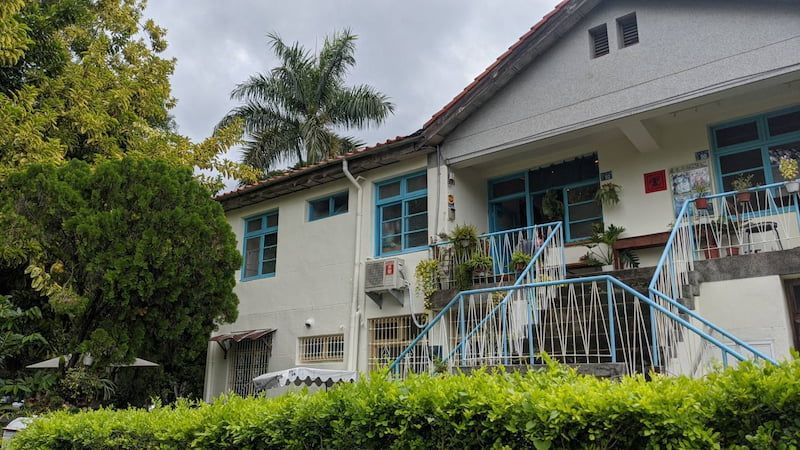
Provincial government daily outreach settlement
The provincial government's daily outreach program aims to deeply integrate the aspirations of the community with local culture. Starting with Zhongxing New Village, the program creatively revitalizes old houses, illuminates the area with passion, explores the local characteristics of the early provincial government, cultivates the potential of the community, and identifies regional cultural, culinary, and ecological richness to assist in its in-depth development, conveying the cultural energy of the area and even transforming it into a brand.
Centered on Guangming Village in Zhongxing New Village, the initiative aims to establish over 10 cultural and creative brand demonstrations. Through in-depth walking tours, cultural tourism will coexist with the local community, and cultural activities will revitalize the area. This will allow the culturally rich, rustic, and natural corners of Zhongxing New Village to shine like sunshine, exist as vitally as air, and flow as enduringly as water. Ultimately, through matchmaking and connections, the initiative seeks to revitalize the community's cultural tourism and create free and in-depth experiences.
However, the cultural salon belonging to Zhongxing New Village is a space for brand and creative incubation, a place where cultural talents gather, and of course, it's also a fun place.
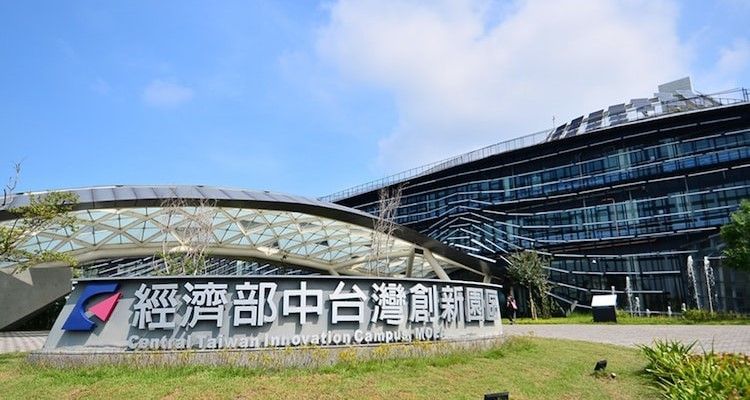
Main building of Zhongchuang Park
Located in Zhongxing New Village, the Zhongchuang Park covers an area of 2.49 hectares. The architectural design integrates the local environment and culture, making full use of the local topography. With low-carbon design as the direction, carbon footprint calculation is incorporated from the planning stage to reduce carbon emissions during the construction process. The building is constructed entirely of metal frame curtain walls, with external sunshades on the exterior walls, which combine art, heat insulation and energy saving, and light-regulating functions. In terms of building carbon reduction design, the design incorporates sunshade, lighting and other features to increase the building's energy efficiency.
The park also features Taiwan's largest angled solar power generation device with a capacity of 140 kilowatts, which can provide 10% of the park's lighting. It has become a model of the concept of combining building structure with solar photovoltaic panels. In 2014, it won the National Excellence in Construction Award - Best Planning and Design Category First Prize. In 2015, it became the first comprehensive R&D building in Taiwan to pass both the Diamond Green Building and Diamond Smart Building certifications. In 2016, it won the Global Excellence in Construction Award - Industry Category First Prize. The building has implemented effective energy management and energy-saving measures, and introduced information and communication automation, air quality monitoring and management systems to prevent failures in real time and improve emergency response capabilities. It is a sustainable building that combines safety, health, comfort, convenience and energy saving.
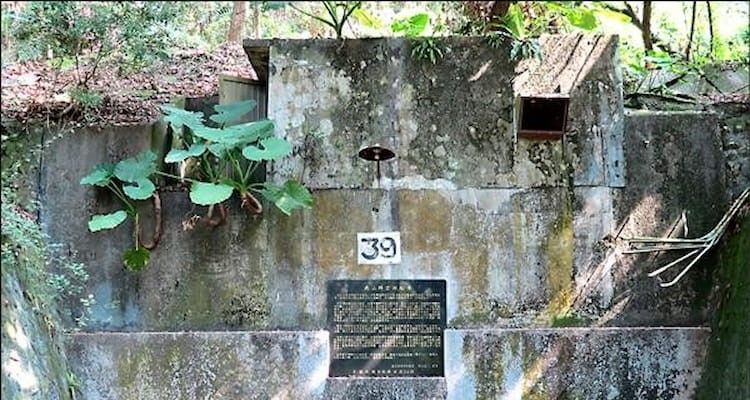
No. 39 air raid shelter
Located at the foot of Tiger Mountain in Zhongxing New Village, Nantou, there is a 1.5-kilometer-long secret tunnel in the mountains, which was once the Taiwan Provincial Government's wartime air-raid shelter (commonly known as the No. 39 Mountain-Circling Air-Raid Shelter). In 1957, the Taiwan Provincial Government relocated from Taipei to Zhongxing New Village in Nantou. To meet the needs of wartime preparedness, Tiger Mountain was used to build a bunker to avoid air raids and to serve as the wartime administrative command center. The military also deployed defense regiments, intelligence radio stations, etc., to protect the provincial government fortress.
The air-raid shelter is said to be able to accommodate more than 3,000 people. The main body of the air-raid shelter is carved along the western foot of Hushan Mountain, adjacent to the ring road of Zhongxing New Village. Its entrances are numbered 1 to 39, hence it is commonly known as the No. 39 air-raid shelter. The shelter can accommodate more than 3,000 people for refuge.
In addition to its refuge function, the air-raid shelter also contained offices, meeting rooms, grain warehouses, generators, and radio communication equipment. It provided a long-term safety net for food and water, making it a veritable fortress for the provincial government. It is also said that there are secret passages leading to other places.
Leisurely clouds reflected in the pond, the sun slowly sets, seasons change and stars shift, and many autumns have passed. Today, the air-raid shelter was damaged by the 921 earthquake, and the walkway inside was damaged. It has been closed to the public ever since. The provincial government has also become history. The mysterious air-raid shelter has gradually been sealed in the memories of local residents.
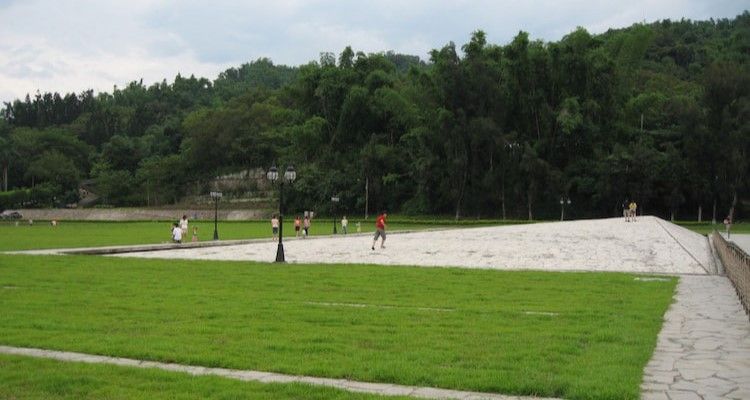
921 Reconstruction Memorial Park
The 921 earthquake in 1999 destroyed the provincial government office building, leaving a large open space after the demolition. The 921 Reconstruction Association selected the work of female designer Zheng Caihe, "Courtyard," from 182 entries from 35 countries through an international design competition. The design was named "921 Reconstruction Memorial Park," and a grove of 4,000 bamboo trees was planted on the open space to symbolize hope and rebirth.
After the project was completed in June 2005, the bamboo groves failed to adapt to the local conditions and did not thrive as expected. Only withered bamboo survived. At the end of January 2007, the Public Construction Commission reluctantly cut down all the bamboo groves covering two hectares and replanted turf in May of the same year.
Interestingly, the removal of the bamboo forest and the disappearance of the courtyard concept have instead created a great place for people to picnic, take walks, and walk their dogs.
The villagers replaced the bamboo landscaping with scenes of gathering, and filled the empty courtyard with laughter. On holidays, many families, friends, and couples can be seen gathering on the large lawn of the memorial park.
Perhaps more valuable than grand and sophisticated architectural concepts is the simple human connection, the way people remember and reflect on the 921 Incident, passing it down from generation to generation. This is the true transformation and rebirth of the pain of that time.
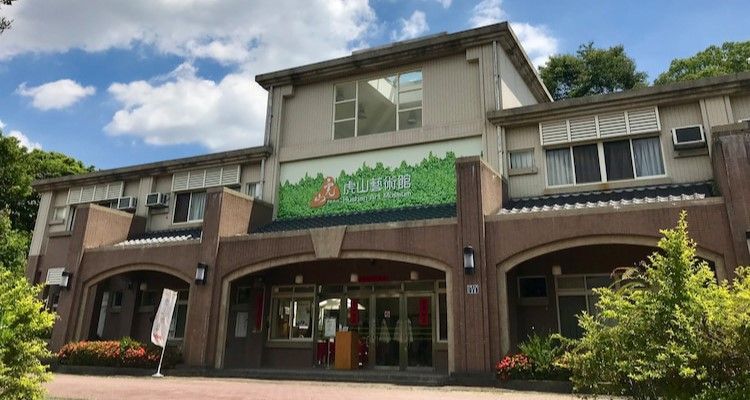
Tiger Mountain Art Museum
The Hushan Art Museum was established in 2006 by the Cultural Affairs Bureau of Nantou County Government. It is located on the mountainside of Hushan next to Zhongxing New Village. Golden shower trees are planted along the way, and when they bloom, they are bright yellow and bloom in unison, as if welcoming you warmly. The slope is gentle and you can choose to walk or drive there.
The building itself has two floors with a glass roof that allows for ample natural light. There are three exhibition rooms on each floor, totaling six. Throughout the year, it hosts art exhibitions and courses, including tea ceremonies, paintings, sculptures, and costumes. The event is diverse and engaging, with a resident cultural volunteer team providing guided tours and explanations, so you don't need to worry about not understanding the exhibits. The outdoor open space features large and small stages that regularly host art performances and cultural markets, attracting large crowds on weekends.
Behind the museum, on the hillside, lies a literary trail with 19 literary guide signs. These signs feature literary quotes written by authors and carved into jade or glass. Immersed in the mountain forest and surrounded by humanistic sentiments, this trail offers a truly enriching experience for both body and mind. It's perfect for families to run and play, couples to enjoy dates, or the whole family to stroll and experience a feast of nature and art.
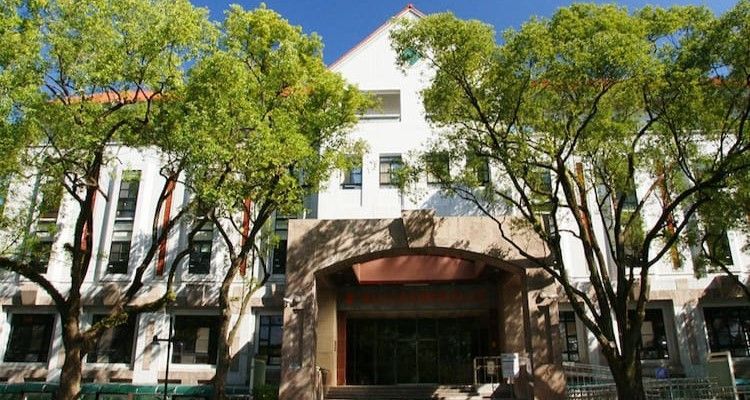
National Public Information Library, Chung Hsing Branch
The National Public Information Library Chung-Hsing Branch, formerly the Taiwan Provincial Government Library, was initially established to facilitate use by provincial government employees. In 1959, in response to the rise of nationwide reading, it transformed into a public library. After the streamlining of provincial administration in 1998, it continued to operate as a "public library."
In 2013, it merged with the National Public Information Library and was renamed "National Public Information Library Zhongxing Branch." Integrating the services and quality of the main library, a space improvement project was undertaken to meet readers' expectations, enhancing both hardware and software facilities to improve service efficiency. The library's collection of Chinese and Western books increased to over 130,000 volumes. The previously outdated second and third-floor reading areas were transformed into bright and airy spaces, with the addition of self-service book return and sorting machines, new book display shelves, and an overall barrier-free environment. This created age- and demographic-specific service spaces, allowing different age groups to find their own reading area. The space was utilized more flexibly. Because the Zhongxing Branch is located near Zhongxing High School, on Saturday and Sunday mornings during exam periods, students could be seen lining up to enter the library, a cherished memory for many students in the Caotun-Zhongxing area.
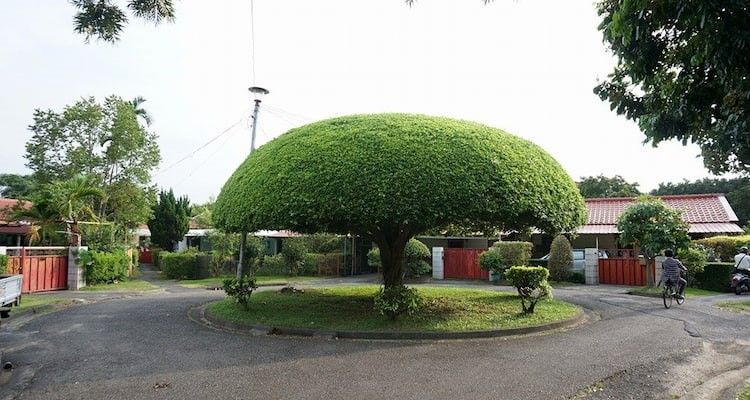
Guanghua Sixth Road, Nangdi Road
Chung Hsing New Village was built based on the concept of a new town in the UK. It is a pastoral-style administrative community that combines offices and residences. Most of the alleyways in the community are winding or T-shaped. The most unique feature is the design of the "bag-bottom road" which prevents through traffic. This design can ensure pedestrian safety and slow down the pace of life.
Nangdi Road, inspired by the overall urban planning of Western countries, refers to a road section or activity space with only one entrance and exit. It typically features a small, roundabout "turning space" at one of the closed ends, resembling a pouch. This facilitates vehicle turning and effectively prevents collisions caused by reversing. Since every house's front door faces the road, children playing in the roundabout are visible to every family member, fostering a sense of community and mutual support. Residents within the community can plant flowers and create landscaping according to their personal preferences, resulting in beautiful scenery. When the flowers are in full bloom, Nangdi Road's design transforms what was once a dead end into a vibrant, flower-filled village, as if taking a roundabout route through happiness.
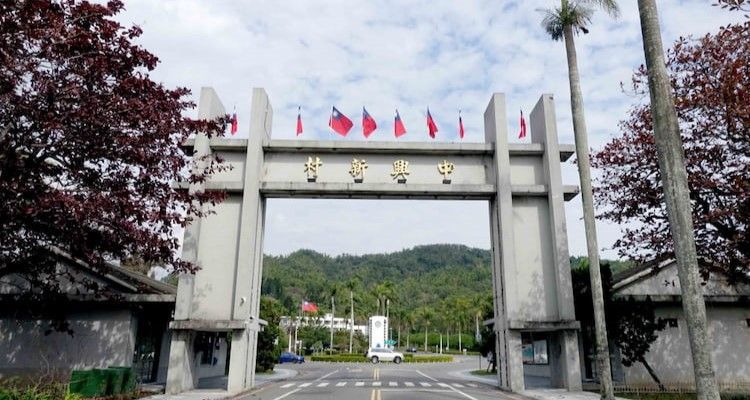
Zhongxing New Village Archway
If you visit Zhongxing New Village, the first thing you'll see when you step onto Shengfu Road is this gray archway shaped like the number ten, as well as the coconut palm avenue and lotus pond.
Although commonly known as the Zhongxing Archway, it is actually a welcoming gate. In ancient times, welcoming gates were called "mountain gates," which originated from Buddhism. Because temples were often built in the mountains and forests, they were called mountain gates. Mountain gates can also be called the Three Gates, which means "gate of faith," "gate of wisdom," and "gate of compassion," or have the meaning of "wisdom," "compassion," and "convenience." The welcoming gate of Zhongxing New Village is adorned with the flag of the Republic of China, which evokes memories of its past prosperity.
Zhongxing New Village was once the home of many Taiwanese civil servants. The welcoming gate also symbolizes "serving in the public sector is a good way to cultivate oneself." Serving in the public sector is closely related to the people. If one can fulfill one's responsibilities, think about the people, and do things that are beneficial to the people, this is a kind of cultivation.
Zhongxing New Village was the former site of the Taiwan Provincial Government and the highest administrative center at the time, a symbol of local autonomy. Although the functions of Zhongxing New Village shrank and its population flowed out after the province was abolished at the end of the 20th century, this gate still stands here, witnessing a page of Taiwan's history.
540 Provincial Government Road, Nantou City, Nantou County
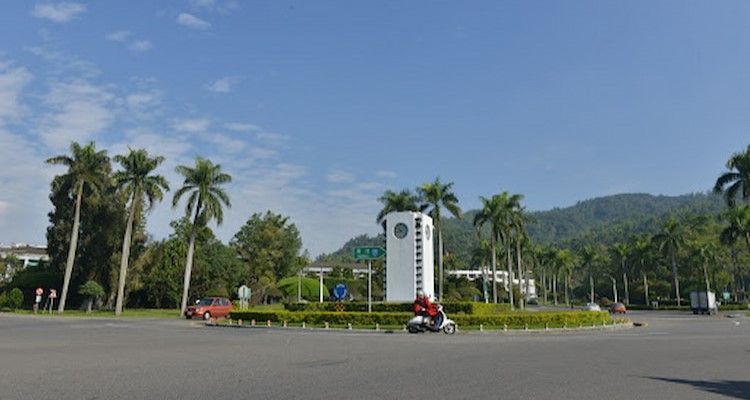
Ring clock
After passing through the welcoming gate, you arrive at the roundabout at the entrance of Zhongxing New Village. A clock base is placed in the center of the landscaped roundabout. The white base has clocks embedded on all four sides. Back then, it served as a constant reminder to the civil servants and residents of Zhongxing New Village that time flies by and they need to work diligently, cherish time, and make the most of their lives.
On September 21, 1999, during the 921 earthquake in Taiwan, Zhongxing New Village experienced a magnitude 7.3 earthquake. The circular clock was tilted and damaged after the earthquake, and the time was stopped at 1:47 a.m. This made the circular clock, which recorded the shocking moment for the whole of Taiwan, a well-known earthquake disaster site.
The circular clock is surrounded by roads that radiate outwards, connecting various government offices and departments. The four directions of the roundabout also lead to important surrounding areas. The front faces the provincial government building, the right leads to Zhongxing New Village, the left leads to Caotun Township, and the rear leads to the Nantou-Zhongxing Interchange of National Highway 3. The roundabout's design requires vehicles on the inside to yield to those on the outside, mainly to facilitate the merging of vehicles within the roundabout. It was originally built to alleviate traffic congestion, and the convenient transportation also improved the administrative efficiency of the village.
Nantou City, Nantou County, Provincial Government Road
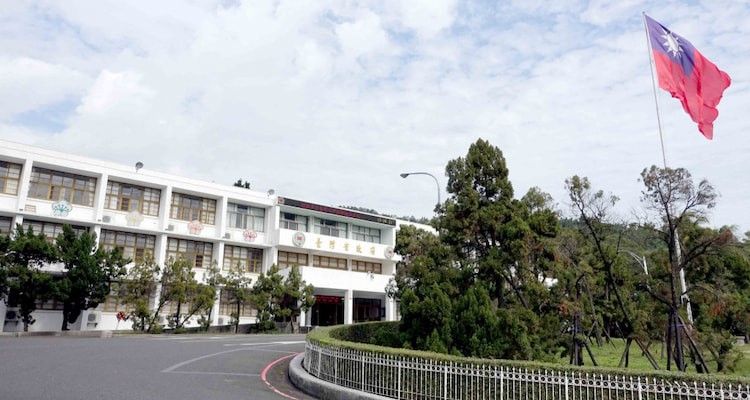
Taiwan Provincial Government
In the early 1950s, in response to an air raid evacuation plan, the government selected about 200 hectares of land at the foot of Tiger Mountain in Nantou City, Nantou County, to build the Taiwan Provincial Government and create a public servant and teacher-type settlement. It was named Zhongxing New Village and officially moved in on June 29, 1957.
Upon arriving at Zhongxing New Village, passing the King Coconut, Lotus Pond, and Roundabout, enter the uphill V-shaped one-way road that symbolizes victory, and you will see the Provincial Government Building.
The Provincial Government Building, located at No. 1, Shengfu Road, Zhongxing New Village, marked the beginning of the construction of Zhongxing New Village and was the first completed three-story building. It was then known as Building No. 1 and its design style was a "quasi-international" modern architecture. Facing southwest, the building primarily showcases the style of an "eagle spreading its wings," with a mountain-shaped structure. The front is three stories high, with two stories on each side. The offices of successive chairmen were located on the third floor at the rear of the central section. The left and right sides housed various departments and offices, facilitating rapid communication and ensuring administrative efficiency.
The Provincial Government Building once managed the important affairs of all counties, cities, towns and townships in Taiwan, and was an important driving force for Taiwan's modernization. It has also witnessed the development of Taiwan's politics, economy, society and culture. In order to highlight its historical value, the Nantou County Government registered the Taiwan Provincial Government Building as a county-level historic site in 2011.
No. 1, Shengfu Road, Nantou City, Nantou County, 540
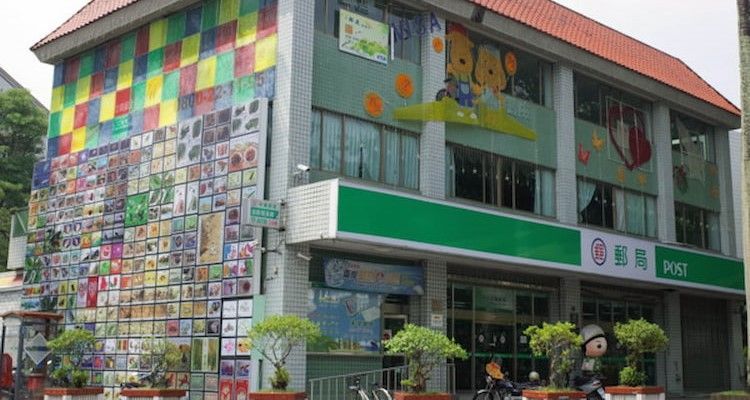
Stamp wall
Since 1957, Zhongxing Post Office has accompanied the residents of Zhongxing New Village, serving various postal services. In the leisurely and peaceful village, it has witnessed the prosperity of the provincial government and the years of transformation.
The 2014 Taiwan Lantern Festival was held in Zhongxing New Village, Nantou. It was a major event for the village after it was upgraded to a provincial-level administrative unit. In cooperation with the organizers, a stamp lantern wall was built next to the main lantern area and activity area, making Zhongxing Post Office the first and only post office in Taiwan to have stamp lanterns.
This stamp wall is about two stories high and features 328 Republic of China stamps. The stamp designs span half a century, witnessing the century-long history of Chunghwa Post. The themes are all-encompassing, full of historical records and unique natural landscapes of Taiwan, making it a very meaningful decorative wall.
Besides the horse stamp, which represents the zodiac animal of the year's main lantern festival, the most distinctive stamps on the stamp wall are those related to Taiwan, such as major construction projects, important events, the 100 highest peaks, endemic species, tourist landmarks, folk toys, and snacks. There are also stamps featuring ancient paintings from the National Palace Museum, stamps with a face value of only 50 cents, and of course, QR code stamps. The rich content is worth exploring in detail. At night, the stunning light wall takes on a different kind of splendor than during the day, making it a sight that tourists shouldn't miss, day or night.
No. 4, Zhongxue Road, Nantou City, Nantou County
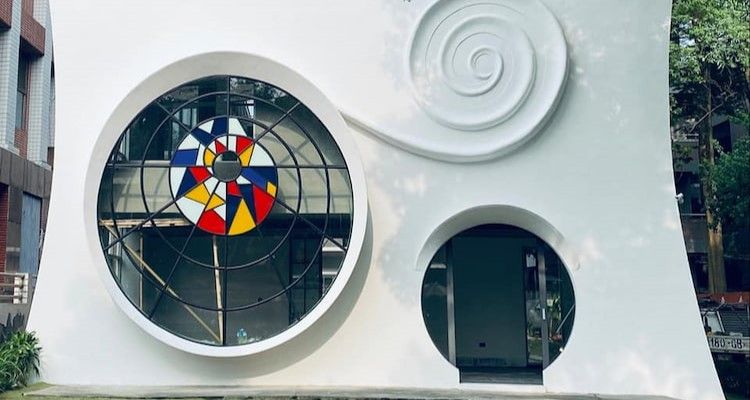
Xiaoxingyuan
Xiaoxingyuan, hailed as "the most beautiful building in Zhongxing New Village," was designed by architect Xiu Zelan for the Taiwan Shin Sheng Daily in 1963. It was originally the office of the Shin Sheng Daily in Zhongxing New Village.
Hsiu Tse-lan, hailed as "Taiwan's First Female Architect," has received numerous awards, including the Taiwan Architectural Achievement Award, one of the Ten Outstanding Young Women, the Outstanding Architect Award, and the Architectural Contribution Award. In the post-war Taiwanese architectural scene, Hsiu Tse-lan, renowned for her classic retro-style work, the Sun Yat-sen Building on Yangmingshan, is one of the few representative figures of Taiwanese expressionism.
The main building of Xiaoxingyuan is a two-story brick building. The red brick exterior is retained on both sides. The white rectangle on the front is combined with the design of circles and vortices. Most people often mistake it for a snail shape, but in fact, the entire building of Xiaoxingyuan is designed with cameras and newspapers as elements.
The large round window with stained glass and the spiral sculpture in the upper right corner are reminiscent of film reels, while the round door is like a camera lens. The expanding rectangular structure on the front is like an unfolded newspaper. Xiaoxingyuan was originally the Zhongxing New Village office of the Taiwan Shin Sheng Daily. The architectural details show the designer's ingenuity.
This place was once a branch of the First Bank. After being converted into a provincial-level administrative unit and undergoing several changes, it was renovated and opened to the public in 2019, showcasing art and cultural works and collections, and providing opportunities for art and cultural exchange activities.
No. 121, Guanghua Road, Nantou City, Nantou County
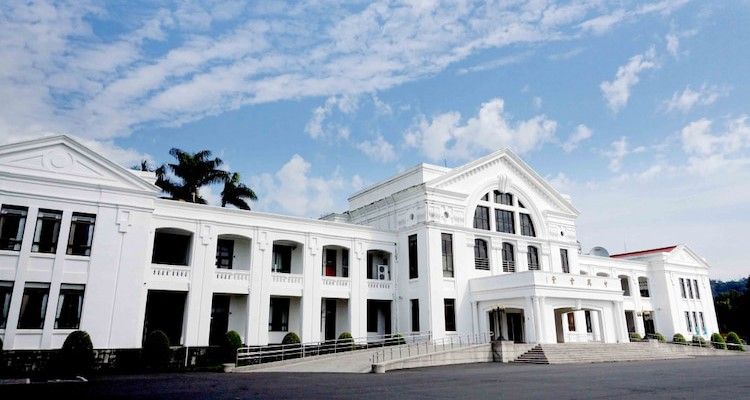
Zhongxing Hall
Zhongxing Hall, opened in 1959, is one of the most magnificent buildings in Zhongxing New Village. In its early years, it served as a venue for provincial government gatherings and receptions for foreign guests and heads of state. Later, it also served as an entertainment space, showing movies for residents to watch.
The Chung Hsing Hall is a Western-style white building that opened on Air Force Day. One theory suggests its design was inspired by the F-84, the main jet fighter of the time, symbolizing victory and takeoff. The building features an elliptical entrance popular in the late 19th century, symmetrically arranged. The entrance porch, arches, colonnades, and gables are largely typical of Western classical architecture, with features such as Massa-style roofs, sloping roofs, and bullseye windows, giving the building an overall grand and stable appearance.
The main body of the building was originally beige, but it gradually faded over time. During maintenance, it was mistakenly thought to be white, so the Zhongxing Hall was painted white. Gradually, everyone assumed that the Zhongxing Hall was originally a white building.
Currently, it is mostly used for large conferences, academic or symposiums, and as a conference center for arts, culture, music performances, and NGOs (non-governmental organizations). As one of the representative landmarks of Zhongxing New Village, Zhongxing Hall has historical significance and tourism value, and was registered as a historical building by the Ministry of Culture in 2011.
No. 1, Guangrong North Road, Nantou City, Nantou County
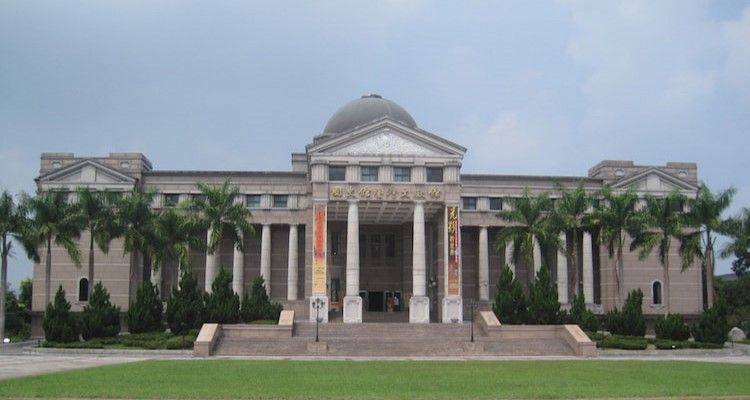
Taiwan Archives
The Taiwan Archives is an institution of the Republic of China government responsible for maintaining and preserving historical and political documents related to Taiwan. Its predecessor was the "Taiwan Provincial Documents Committee," established in 1949 by the Taiwan Provincial Government. After streamlining, it was renamed and became the sole affiliated agency of the National History Museum. Its main responsibilities include compiling the Complete History of Taiwan and preserving related historical materials.
The museum comprises three buildings: the Documentation Building, the Heritage Building, and the Historical Site Building. These three buildings have distinctly different styles: the Heritage Building, located in the center of the grounds, is in the European Renaissance style; the Historical Site Building, on the left side of the grounds, is in the style of a northern Chinese palace; and the Documentation Building, located to the right of the entrance, features white walls and red tiles. Each building houses valuable and important historical materials, including manuscripts, scrolls, folk artifacts, and information on the development history of Taiwan.
History and culture are the foundation of a nation. In its early days, the Taiwan Archives was a dedicated unit for the collection, collation, preservation, publication of documents and periodicals, and compilation of local histories. The archives are rich in historical materials. Today, the archives are committed to promoting Taiwan's history and culture, enabling people to access and understand Taiwan's history. It combines history, culture, education, and tourism. In addition to commemorating the outstanding contributions of the sages and pioneers, it also carries the meaning of learning from the virtuous and passing on the legacy, and encourages the people of Taiwan to work together to create a long and prosperous history for Taiwan.
No. 254, Guangming 1st Road, Nantou City, Nantou County